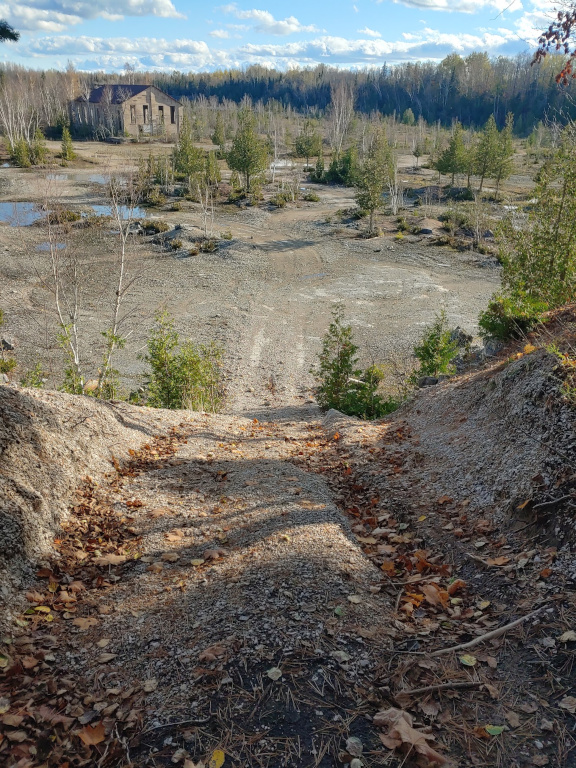
The Fiborn Karst Preserve is a 480-acre nature reserve located in Mackinac County within Michigan’s Upper Peninsula, between St. Ignace and Newberry. Purchased by the Michigan Karst Conservancy in 1987, the property protects a rare geological landscape shaped by dissolving Niagara Escarpment limestone. Visitors can explore surface features like shallow sinkholes, disappearing creeks, springs, and the Hendrie River Water Cave—Michigan’s longest known cave, stretching about 1,500 feet. Because the caves serve as critical hibernation sites for species like the Little Brown Bat and Northern Long-eared Bat, cave entry is strictly restricted and closed from mid-October to mid-May.
Fiborn Karst Ruins
Amy and I came across and visited this place. Here are some images of one of the rock walls that has a wavy texture to it, which was fascinating.


This old building looks like it came straight out of The Flintstones, doesn’t it?


Here are some more views of buildings and a phallic-symbol-looking tower.


Graffiti usually makes a place ugly, and they have a sign here to show respect for these 1905 buildings, but we enjoyed the graffiti markings we found on the walls.


Here are some more pictures we took while exploring this large area.


Hendrie River Water Cave: A Hidden Underground World in Michigan’s Upper Peninsula
While exploring the ruins, we came across this sign. Needless to say, we did not enter the cave, but here is some information below that tells you how you can do so legally.

Deep beneath the trees at Fiborn Karst Preserve in Michigan’s Upper Peninsula, water has been carving its way through limestone for thousands of years. The result is the Hendrie River Water Cave, recognized as Michigan’s longest known cave system.
The cave took shape roughly 7,000 to 10,000 years ago, after the glaciers that covered the region retreated. Today, its narrow limestone passages stretch about 1,500 feet underground. A stream runs through the cave year-round, with water levels often reaching knee-deep. Follow the water far enough, and it eventually reaches a circular formation known as the “Goop Loop.” From there, the underground water resurfaces at a spring about a mile away.
A Landscape Shaped by Water
The ground above the cave has its own story to tell. Fiborn Karst Preserve sits in an area of limestone bedrock where water slowly dissolves the rock, creating sinkholes, underground channels, and streams that seem to disappear into the earth.
This type of terrain is known as karst, and it can make an ordinary walk through the woods a little more interesting. A stream flowing across the surface might suddenly vanish underground, only to emerge somewhere else.
The Michigan Karst Conservancy protects the cave and surrounding property. The Conservancy acquired the former limestone quarry site in 1987, helping preserve an unusual piece of the Upper Peninsula’s geological history.
A Refuge for Bats and Other Wildlife
The cave isn’t just a geological curiosity. Its cool, damp conditions provide shelter for bats, including the Little Brown Bat and the Northern Long-eared Bat. These animals depend on suitable underground spaces during parts of their annual life cycle, including swarming and hibernation.
Caves like Hendrie River Water Cave are sensitive environments. Disturbing bats or damaging underground formations can have lasting effects, even when the damage might seem minor to a visitor.
Can You Explore Hendrie River Water Cave?
You can visit Fiborn Karst Preserve to enjoy its surface trails and explore the surrounding woods, but don’t expect to walk straight into the cave. Access to Hendrie River Water Cave is heavily restricted to protect its fragile environment and keep visitors safe.
This isn’t a typical tourist cave with paved walkways and installed lighting. The passages are narrow, water flows along the floor, and flooding can create dangerous conditions. Exploring the cave requires appropriate equipment, including wetsuits and other safety gear, along with advance permission or arrangements through the Michigan Karst Conservancy.
For most visitors, the best way to experience Fiborn Karst Preserve is to stay on the surface trails and appreciate the strange geology beneath their feet. There’s something fascinating about knowing that a stream is working its way through solid rock just below the forest floor, following a route that has taken thousands of years to form.
To schedule a guided tour or request access to the Hendrie River Water Cave, you must work directly with the Michigan Karst Conservancy (MKC), which tightly manages access to protect the fragile subterranean ecosystem.
How to Request a Tour or Access Permit
Because the cave is highly prone to sudden flooding and provides a vital winter habitat for bats, casual exploration is not permitted. To arrange a trip, follow these specific steps outlined by the conservancy:
- Contact the Preserve Coordinator: Reach out to the MKC coordinator, Aubrey Golden, by email at goldencamp@comcast.net or call 248-666-1683 to inquire about upcoming guided weekend trips or to request permission for a group.
- Submit the Required Paperwork: Every visitor entering the cave must sign and return a Fiborn Karst Preserve Use Permit form, a liability waiver, and a specialized White-Nose Syndrome addendum (designed to prevent the spread of a fungus deadly to bats).
- Align with the Seasonal Window: Guided tours and maintenance days typically run once a month from May through October. Direct cave entry is generally closed outside these months to avoid disturbing hibernating bat populations.
Mandatory Gear Requirements
The MKC enforces a strict “no gear, no entry” policy for your safety. If you are granted permission to tour the water cave, you are required to bring and wear:
- Three independent light sources (such as a helmet-mounted headlamp plus two reliable backup flashlights).
- A protective helmet.
- A thick wetsuit or heavy, warm layered clothing (the cave water is perpetually freezing and can reach knee-deep or waist-deep levels).
- Sturdy, high-traction footwear that you don’t mind getting completely soaked.
- A full change of dry clothes and shoes left at the surface.
If you prefer a casual visit that doesn’t require permits or specialized gear, the surface trails at the Fiborn Karst Preserve are completely free and open to the public during daylight hours. You can follow self-guided interpretive pathways to view the ancient limestone quarry foundations, deep sinkholes, and the spot where the river disappears entirely underground.
Leave a Reply